
Invited Speakers

Dr. Caitlin Bentley
King's College London, UK
Title: From Model Accuracy to Learner Progression: A Multi-Level Approach to AI Assurance in Education
Abstract: Assurance frameworks for AI in education are emerging, but they remain technocentric. This talk argues that technocentric assurance frameworks are a design flaw in the context of education. Competence effects of AI use in education have varying impacts over time for different learners. Cumulatively, over the course of a learner's progression, negative impacts may be structurally invisible when focusing only on model outputs at a specific moment in time. I illustrate this with findings from a recent human-AI teaming study, where learners trained to operate an autonomous system became less effective over time with increasing dependence on AI, despite indistinguishable self-reported confidence. Drawing on this research and on intersectional data science methods more broadly, I set out what a multi-level assurance approach for AI in education would need to evaluate, and who is responsible for assurance in this context.
Bio: Caitlin Bentley is a Senior Lecturer in AI Education, actively shaping the future of responsible AI through education. She is a member of the Delivery Team on the UKRI Responsible Artificial Intelligence UK (RAI UK) programme. Previously, she served on the UKRI Trustworthy Autonomous Hub Skills Committee, Syllabus Lab, and EDI working group. As a newly appointed co-director of the UKRI Safe and Trusted AI Centre for Doctoral Training, and ex officio member of MASSPeople, the first international working group establishing competency frameworks and standards for remote and autonomously enabled marine surface vessels, Caitlin contributes to initiatives that nurture the next generation of experts in safe and trusted AI, promoting responsible innovation and ethical practices. Caitlin's multi-disciplinary academic background includes prior positions at the University of Sheffield, the 3A Institute at Australian National University, and Nanyang Technological University, Singapore. Her academic journey includes a PhD in Human Geography, ICT4D, from Royal Holloway, University of London, a Masters in Educational Technology from Concordia University, and a BA in Computer Science from McGill University. Beyond academia, Caitlin's professional experiences in international development and the technology sectors have taken her to Canada, the UK, Africa, and the Asia-Pacific region. This background allows her to bring a global perspective and an appreciation for diverse cultures and contexts to her work.
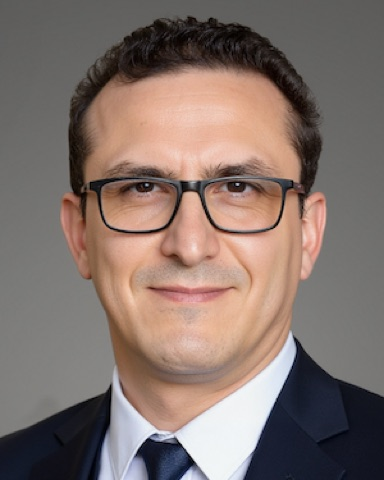
Dr. Ahcene Bounceur
University of Sharjah, UAE
Title: When Your City Can Think: Building Agentic Digital Twins for Smart City Emergency Response
Abstract: What happens when a fire, a gas leak, and a flood hit a city at the same time? Today's smart cities still rely on rigid, rule-based programs that were never designed to reason through compound crises. This keynote introduces CupCarbon-Klaines, an Agentic AI framework that embeds autonomous, LLM-powered agents directly into smart city Digital Twins to replace static emergency scripts with intelligent orchestration.
The talk walks through three key innovations: a visual drag-and-drop Agentic Builder for designing AI-driven workflows, an open interoperability layer for connecting to external AI platforms, and a three-paradigm programming model that lets cities adopt agentic intelligence incrementally. Together, these enable building-level micro-agents for localized response and a city-level orchestration agent for macro-logistics.
Early results show up to 20% latency reduction, over 21% energy savings, and a near-doubling of cyber-physical security scores. The work points toward a future where cities don't just collect data — they understand emergencies and respond on their own.
Bio: Dr. Ahcene Bounceur, IEEE Senior Member, is an Associate Professor of Computer Science at the University of Sharjah. Previously, he served as an Associate Professor at KFUPM and as a Senior Associate Professor with qualifications for professorship at the University of Brest in France. In 2021, he was appointed by the French Ministry as a member of the National Council of Universities (CNU). His current research centers on Agentic AI, Digital Twin IoT, Cybersecurity of smart critical infrastructures, as well as exploring Data Science, Wireless Sensor Networks (WSN), and Pseudo-polygons.Dr. Ahcene Bounceur, IEEE Senior Member, is an Associate Professor of Computer Science at the University of Sharjah. Previously, he served as an Associate Professor at KFUPM and as a Senior Associate Professor with qualifications for professorship at the University of Brest in France. In 2021, he was appointed by the French Ministry as a member of the National Council of Universities (CNU). His current research centers on Agentic AI, Digital Twin IoT, Cybersecurity of smart critical infrastructures, as well as exploring Data Science, Wireless Sensor Networks (WSN), and Pseudo-polygons.
Dr. Bounceur earned his Habilitation to Lead Research (HDR) in 2014, his Ph.D. in Micro and Nano Electronics from Grenoble INP, France, in 2007, an M.Sc. in Operations Research from ENSIMAG, Grenoble, in 2003, and his Engineering degree in Operations Research from the University of Bejaia. He placed 3rd in the IEEE TTTC Doctoral Thesis Contest in Berkeley, USA, in May 2007. He has coordinated the PERSEPTEUR project and collaborated in the Suidia project, an IoT-based digital health initiative that resulted in a patent. To date, Dr. Bounceur has published over 200 articles and has frequently been invited as a keynote speaker. He is also the primary developer of the CupCarbon simulator.